
Water Recycling in Multi-Family Buildings in Sweden: New Technology and Legislation That Saves Money
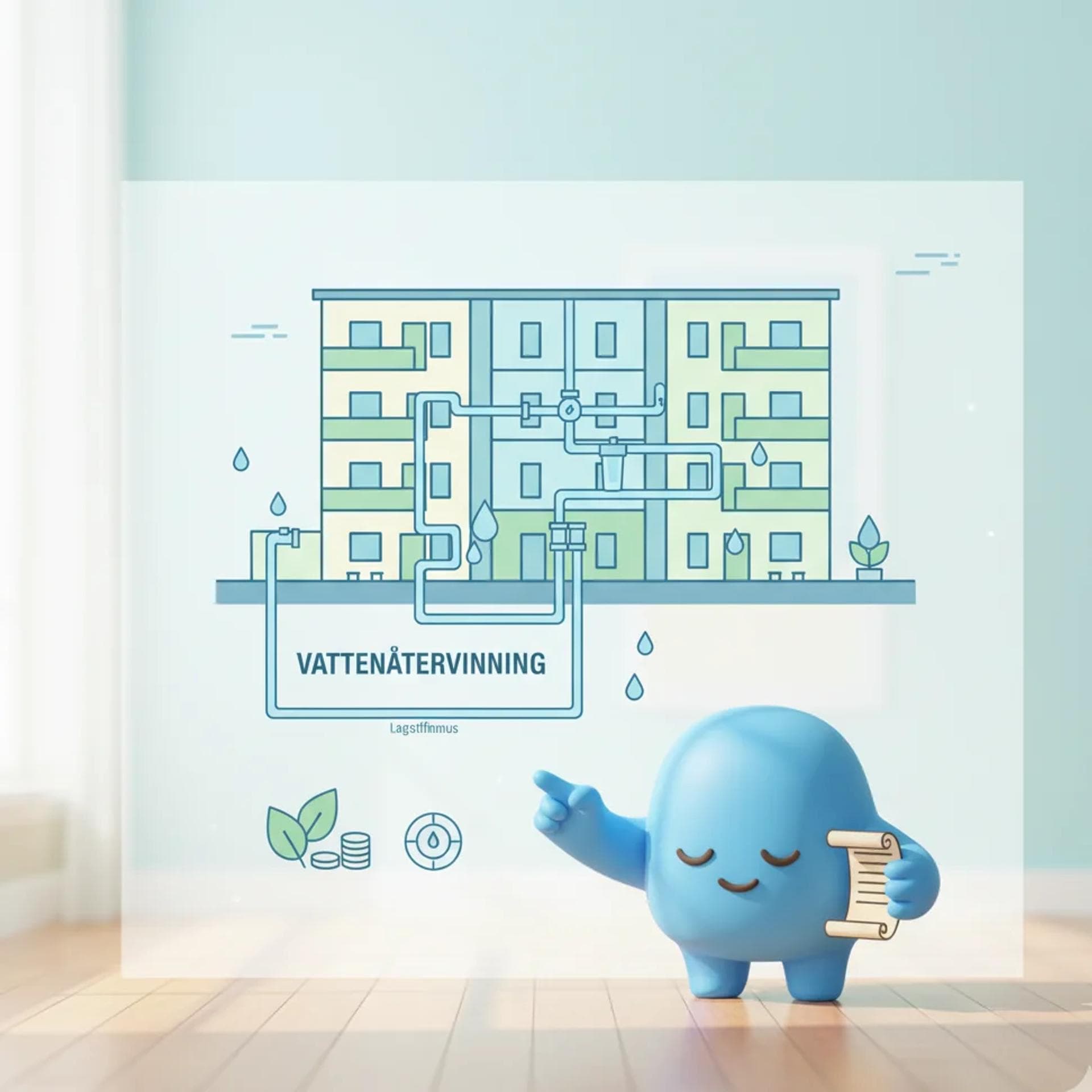
With rising energy prices and higher interest rates, Swedish housing cooperatives (known as bostadsrättsföreningar or BRFs, a common ownership model in Sweden) and tenants face tough economic challenges. Here, water recycling in multi-family buildings emerges as a smart and sustainable solution to significantly reduce costs. Through innovative technology, greywater from showers and sinks can be purified and reused for toilet flushing and irrigation, potentially saving up to 40 percent of total water and energy consumption. New Swedish legislation facilitates implementation through clearer guidelines and support for energy efficiency, making it easier for BRFs to invest in these systems. On Bostadsmerit.se, your leading source for insights into the Swedish housing market, we guide you through the latest trends in legislation, economy, and property management – so you can navigate the sector with confidence and maximize savings for both the association and residents.
The Basics of Water Recycling for Multi-Family Buildings in Sweden
Water recycling in multi-family buildings involves reusing used water to reduce overall consumption. Unlike traditional usage, where all drinking-quality water from Sweden's municipal VA networks (vatten och avlopp, or water and sewage systems) is used and then treated in sewers, here greywater and rainwater are recycled for non-potable purposes like toilet flushing and irrigation. This aligns well with Swedish environmental requirements, such as the National Board of Housing, Building and Planning (Boverket)'s building regulations and the EU Water Framework Directive, which promote resource efficiency in the construction sector.
Basic components include collection tanks, filters, UV disinfection, and pump systems. The technology relies on mechanical and biological treatment to ensure hygiene and quality.
Types of Water Recycling Systems
- Greywater recycling: Water from showers, sinks, and washing machines is treated and reused for toilet flushing or garden irrigation. Common in Swedish multi-family buildings to save up to 40% of water consumption.
- Blackwater recycling: Wastewater from toilets is treated in advanced systems using membrane filtration and reused for irrigation or industrial processes. Less common in residential settings due to higher treatment requirements.
- Rainwater management: Collection from roofs and surfaces for flushing or cleaning. Easy to implement in Sweden's climate with abundant rainfall.
Environmental Impact and Sustainability
Water recycling reduces the load on municipal VA networks and lowers water consumption by 30-50% per household. According to guidelines from the Swedish Environmental Protection Agency (Naturvårdsverket), it contributes to reduced nutrient emissions and energy efficiency. For multi-family buildings, this means long-term savings and higher sustainability ratings in certifications like Miljöbyggnad.
Integration into Existing Buildings
In new multi-family buildings in Sweden, systems are seamlessly integrated into VA installations from the start of construction. For older buildings, retrofits use modular tanks in basements or on roofs, combined with filter units. Installation requires VA approval and costs initially 100,000–500,000 SEK depending on size, but offers quick ROI through lower water bills.
New Technology in Water Recycling
New technology in water recycling for multi-family buildings is revolutionizing water management in Swedish properties. Innovations like membrane technology, UV disinfection, and IoT monitoring improve both efficiency and safety. These solutions, often developed by Swedish manufacturers and supported by EU-funded projects, reduce water consumption by up to 50 percent and significantly lower operating costs.
Advanced Filtration and Treatment
Reverse osmosis is a leading method that effectively removes impurities through semi-permeable membranes. Biological treatment processes use microorganisms to break down organic material, producing high-quality recycled water for toilet flushing and irrigation.
These techniques ensure water meets strict hygiene standards and reduces legionella risk. Swedish companies like Bofrid offer integrated systems combining these for optimal performance in multi-family buildings.
Smart Sensors and Automation
IoT solutions with sensors monitor water quality in real-time, including pH, turbidity, and temperature. Automation adjusts processes automatically to optimize treatment and avoid waste.
Through cloud-based data analysis, property owners can predict maintenance needs and save money. EU projects like Water4Cities have tested these in Swedish pilot projects with promising results.
Energy-Efficient Pumps and Storage
Modern energy-efficient pumps with variable speed reduce electricity use by 30–40 percent compared to older models. Advanced insulated tank storage keeps water fresh longer.
These components integrate seamlessly into existing systems, making water recycling profitable even in older Swedish multi-family buildings. Property managers report quick return on investment through lower water and energy bills.
Legislation and Regulations for Water Recycling in Sweden
Water recycling in multi-family buildings is regulated by several Swedish laws and authorities, primarily Boverket and the Swedish Food Agency (Livsmedelsverket). Building standards ensure safe use of recycled water, while VA companies set specific requirements for connections and operations. EU directives like the Water Framework Directive (2000/60/EC) influence Sweden through demands for resource efficiency, and upcoming changes to the building energy directive may require more water recycling in new projects.
For permit applications, BRFs or property owners should contact the municipality and local VA companies early. A building permit application under the Planning and Building Act (PBL) is often necessary, and hygiene certificates from Livsmedelsverket may be required for systems with contamination risks.
Requirements under the Planning and Building Act
The Planning and Building Act (PBL) governs installations of water recycling systems in multi-family buildings. Boverket's building regulations (BBR) require systems to meet performance requirements for sustainability and safety, including separation of recycled water from drinking water pipes.
New buildings must demonstrate energy efficiency, where water recycling can contribute to lower VA costs. For renovations in existing buildings, a control plan verifies no impact on structural integrity.
Hygiene and Safety Regulations
Livsmedelsverket categorizes water as potable and non-potable. Recycled greywater may only be used for toilet flushing or irrigation, with strict requirements for filtration and UV disinfection to avoid legionella.
Guidelines (SLVFS 2001:30) prescribe regular sampling and backflow preventers. In multi-family buildings, property owners must document maintenance to protect tenants.
- Potable water: Must meet the highest hygiene standards.
- Non-potable: Warning signs are mandatory.
State Support and Grants
Klimatklivet offers investment support up to 50 percent for water recycling in multi-family buildings, focusing on reduced emissions and water savings. Apply via Naturvårdsverket with a technical description and cost calculation.
Other opportunities include energy declaration grants from Boverket or regional VA funds. Always check current calls, as budgets are limited and prioritize energy-efficient solutions.
Economic Savings with Water Recycling
Water recycling in multi-family buildings offers significant economic benefits, especially amid rising VA fees and mortgage rates in Sweden. According to average figures, systems can recycle 40-60% of used water, reducing costs by 20-40% annually. With recent interest rate hikes of up to 1 percentage point, such savings are critical for BRFs' liquidity.
Cost Analysis and Payback Time
For a typical multi-family building with 30 apartments, the investment cost for a water recycling system is around 400,000–800,000 SEK, depending on size. Annual savings are estimated at 80,000–150,000 SEK in reduced VA fees.
- Small system (20 apartments): Payback time 4–6 years, ROI approx. 15–20%.
- Medium system (50 apartments): Payback time 3–4 years, ROI 25–30%.
- Large system (100+ apartments): Payback time 2–3 years, ROI over 35%.
These calculations account for rising VA taxes of 5–10% per year and higher interest rates pressuring operating budgets.
Impact on Rent Levels and Fees
Savings are passed directly to residents through lower monthly fees. A BRF with 50 apartments can reduce fees by 200–400 SEK per apartment per month after payback.
For rental properties, it stabilizes rent levels, as lower operating costs counteract the need for increases. Residents also benefit from lower electricity costs with energy-efficient systems.
Long-Term Economic Benefits
Beyond direct savings, property value increases by 5–10% upon sale, thanks to modern water recycling attracting buyers. Over 20 years, savings amount to millions of kronor, with reduced risk of future fee hikes.
In a market with uncertain interest rates, this becomes a strategic investment for sustainable finances.
Practical Implementation in Swedish Housing Cooperatives
Planning and Feasibility Study
Start with a feasibility study to assess your building's suitability. Check the building's age, VA pipes, and roof area – older buildings from the 1960s-70s often suit greywater systems well.
- Conduct an energy calculation using Boverket's tools to quantify savings.
- Involve residents via general meeting for support; board decisions require at least 2/3 majority.
Common pitfall: Underestimating renovation needs. Success factor: Hire an independent consultant early.
Selecting Suppliers and Installation
Choose certified suppliers experienced in water recycling in multi-family buildings. Verify references and Svanen labeling for quality.
- Request quotes from at least three contractors.
- Ensure building permits via the municipality and Boverket's building regulations (BBR).
- Plan installation during low season for minimal disruption.
Tip: Avoid low-cost options without warranties. Success: Strong partnerships with local VA expertise.
Maintenance and Operating Costs
After installation, establish routines for maintenance – filter changes every 6 months and annual inspections cost approx. 10-20,000 SEK/year for a medium-sized building.
- Budget operating costs at 5-10% of the investment annually.
- Monitor performance via digital systems to maximize ROI in 3-5 years.
Pitfall: Forgetting service agreements. Success factor: Train the operations manager and integrate into the BRF's financial plan.
Case Studies from Swedish Multi-Family Buildings
Sweden leads development in water recycling for multi-family buildings, with practical examples from major cities demonstrating significant savings. These case studies illustrate how new technology is integrated into both new builds and renovations, with measurable results.
Examples from Major Cities
In Stockholm, housing company Stockholmshus installed water recycling systems in a new multi-family building in Hammarby Sjöstad. The system recycles greywater from showers for toilet flushing, reducing water consumption by 40 percent per household.
In Gothenburg, a 1970s complex in Majorna was renovated by Älvstranden Utveckling. Here, rainwater and wastewater are recycled, achieving a total saving of 35 percent in municipal water use since 2022.
Results and Challenges
Both projects report annual savings of 200,000–500,000 kronor per property, depending on size. Energy costs dropped by 25 percent due to reduced heating of incoming water.
Challenges included high initial costs (approx. 1.5 million kronor per building) and filter maintenance. Solutions like sensor-controlled cleaning and user training reduced downtime by 70 percent.
- Savings: Water -40%, costs -30%
- Challenges: Installation time (6 months), but ROI within 5 years
Scaling to Smaller Towns
The technology is scalable for medium-sized cities like Växjö and rural areas. In Umeå, modular systems are tested for smaller buildings, adapted for cold climates with freeze protection.
Lessons from major cities point to standardized modules lowering costs by 20 percent. For smaller locations, collaboration with municipal VA companies is recommended for subsidies.
On Bostadsmerit.se, we analyze how such trends impact the entire Swedish housing market, from economy to sustainability.
Future Trends in Water Recycling
The future of water recycling in multi-family buildings looks bright with rapid advances in technology and policy. Forecasts indicate increased integration with other sustainability technologies like solar energy, potentially reducing energy costs by up to 30 percent in multi-family homes. Bostadsmerit follows developments closely and provides the latest updates to help you navigate this dynamic market.
Upcoming Innovations
AI-optimized systems will revolutionize water recycling through real-time analysis of flows and consumption. These predict usage peaks and optimize treatment efficiency, reducing waste by 40 percent.
New materials like nanomembranes and self-cleaning filters enable more efficient greywater recycling for toilet flushing and irrigation. Integration with solar energy powers pumps and sensors, creating fully self-sufficient units in multi-family buildings.
Policy Developments in Sweden
Expected legislative changes from the government will strengthen water-saving requirements in new builds, inspired by the EU's Green Deal. By 2030, subsidies for water recycling systems could double, focusing on multi-family buildings.
EU influence drives harmonized standards for energy efficiency, benefiting Swedish property owners with lower operating costs and higher property values.
Market Forecasts
The market for water recycling in multi-family buildings is expected to grow by 15 percent annually until 2030, according to industry forecasts. Investments in Sweden already amount to billions, driven by rising water prices.
- Growth figures: Increased demand in major cities like Stockholm and Gothenburg.
- Investment trends: BRFs prioritize ROI of 5-7 years through lower bills.
Stay updated via Bostadsmerit to capitalize on these trends.
Frequently Asked Questions
Can water recycling be used for drinking water?
No, water recycling in multi-family buildings is not intended for drinking water. Recycled water is mainly used for toilet flushing, irrigation, and washing machines. Drinking water must meet strict hygiene requirements according to Livsmedelsverket, while greywater requires separate piping and regular sampling.
How much can a BRF save?
A BRF can save 20-40 percent on water and sewage costs with modern water recycling. For a typical multi-family building with 50 apartments, this means annual savings of 100,000–300,000 kronor. Use calculation tools from Svenskt Vatten or local VA companies for precise figures based on your consumption.
What permits are required?
Permits are required from the municipality's building committee for installation and from local VA companies for connection. The process takes 3–6 months; start with a VA application and technical description. Contact Boverket for guidance on building standards.
Is it worth the investment in older buildings?
Yes, especially in buildings constructed before 1990 where ROI often reaches break-even in 5–10 years. Older properties have higher water consumption and poorer insulation, increasing savings potential. Conduct an energy audit to assess profitability.
Which suppliers are recommended?
Recommended Swedish suppliers include Xylem, Grundfos, and Tibo Water Systems, with reference projects in Stockholm and Gothenburg. Choose certified installers via Svensk Byggtjänst. Request quotes and customer reviews for the best match.
Does it affect the property's value?
Yes, water recycling increases property value by 5–10 percent upon sale through environmental benefits and lower operating costs. Buyers value sustainability; document the installation in the energy declaration for marketing advantages.