
Sweden's Wood House Boom 2026: Benefits and Challenges of Large-Scale CLT Construction
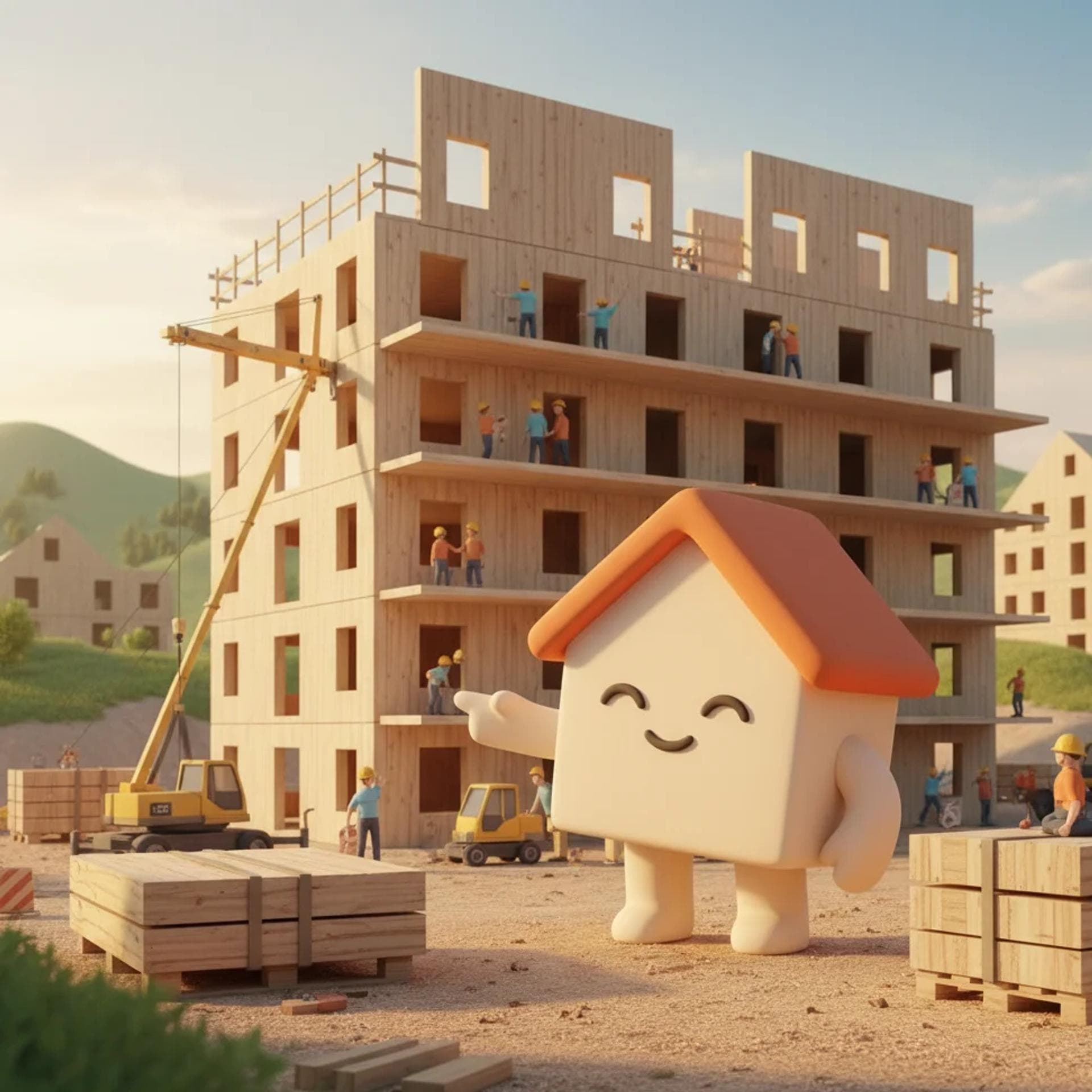
Sweden's wood house boom 2026 is taking off on the Swedish housing market with a storm, driven by stricter sustainability requirements and groundbreaking advances in cross-laminated timber (CLT). According to Boverket (Sweden's National Board of Housing, Building and Planning), the share of wood houses in multi-family buildings has increased by over 40 percent in the last five years, and forecasts indicate that CLT construction will account for one-third of all new projects by 2026. This shift promises not only lower carbon dioxide emissions and faster construction times but also innovative solutions for urban growth in Sweden. As a leading source for insights into the Swedish housing market on Bostadsmerit.se, we provide you with the latest analysis of this trend. In this article, we explore the background to the wood house boom, benefits and challenges of large-scale CLT production, relevant Swedish laws, inspiring case studies, future prospects, and answers to common questions – all to help you navigate this exciting development as an international living in Sweden.
The Background to Sweden's Wood House Boom 2026
Sweden's wood house boom 2026 emerges from a perfect storm of environmental directives, technical innovations, and economic incentives. The EU's climate targets for net-zero emissions by 2050, combined with Sweden's fossil-free goal by 2045, have pressured the construction sector to reduce reliance on concrete. Swedish building standards, updated via Boverket, now facilitate cross-laminated timber (CLT) as a load-bearing material in tall buildings, shifting it from niche to mainstream in Sweden.
According to Boverket's statistics, the wood house share in multi-family buildings has risen from 6 percent in 2010 to 18 percent in 2023. The Swedish Forest Agency (Skogsstyrelsen) forecasts continued growth to 25–30 percent by 2026, driven by Sweden's abundant forests and lower carbon footprint – CLT sequesters up to 1 ton of CO₂ per cubic meter.
Historical Development of CLT in Sweden
CLT was introduced in Sweden in the early 2000s, inspired by Austrian pioneers like Binderholz. The first commercial use came in 2009 with small-scale projects, but the breakthrough occurred around 2015.
Key projects driving Sweden's wood house boom 2026 include:
- Strandparken in Västerås (2014), Sweden's first multi-family building in solid wood.
- Hyttkvarteret in Sundbyberg (2019), with 8 stories in CLT.
- Sara Kulturhus in Skellefteå (2023), 20 stories and Europe's tallest wooden building at the time.
These have proven CLT's fire safety and seismic properties, according to SP Trätek (a Swedish wood technology research institute).
Market Forecasts for 2026
Boverket predicts that wood houses will account for 27 percent of all new construction in 2026, up from 12 percent in 2020. The Swedish Forest Agency estimates a 40 percent volume increase in CLT production, thanks to investments in sawmills.
The forecasts are based on:
- Subsidies via Klimatklivet (Sweden's Climate Leap grant program for climate investments).
- Certification requirements for green buildings (Miljöbyggnad Silver/Gold, Sweden's leading environmental certification for buildings).
- Cost reductions: CLT prices have fallen 20 percent in the last five years.
For the Swedish housing market, this means more sustainable options, but it requires adapted insurance and expertise for expats and locals alike.
Benefits of Cross-Laminated Timber in Large-Scale Construction
In Sweden's wood house boom 2026, cross-laminated timber (CLT) stands out as a revolutionary material for large-scale construction. Unlike concrete and steel, which have high carbon footprints and long construction times, CLT offers lower emissions, faster assembly, and impressive fire resistance. For example, construction time can be shortened by up to 30–50 percent, leading to cost savings of 10–20 percent per project, while energy efficiency increases through wood's natural insulation properties.
Environmental and Sustainability Gains
CLT reduces CO₂ emissions by up to 80 percent compared to concrete, as wood sequesters carbon during growth. The material supports the circular economy – it is renewable, recyclable, and easily disassembled. In Sweden, with access to sustainable forestry, this becomes key to green housing projects during Sweden's wood house boom 2026.
- Carbon sequestration: A CLT building stores tons of CO₂ long-term.
- Less waste: Factory production reduces on-site waste by 90 percent.
Economic Benefits for Developers
Shorter construction times mean lower total costs and faster revenue generation. CLT's prefabrication reduces labor costs and weather dependency. Companies like Bofrid leverage this for efficient multi-family housing, with savings of millions of kronor per building.
Design Flexibility and Aesthetics
CLT gives architects freedom for large spans and organic shapes impossible with concrete. The warm, natural aesthetic enhances livability and value. In Sweden's wood house boom 2026, it opens doors to innovative, aesthetically appealing homes that combine functionality with beauty.
Challenges in Large-Scale CLT Production
Raw Material and Supply Chain Issues
Sweden's wood house boom 2026 heavily relies on domestic forest raw materials, but annual harvesting is insufficient for massive CLT scaling. Imports from the Baltics or Central Europe increase risks of price volatility and quality variations due to global supply chains.
Logistics for heavy CLT panels, which can weigh several tons, create bottlenecks in transport and assembly. To counter this, investments in regional sawmills and digitalized supply planning are proposed:
- Local production units near construction sites.
- Partnerships with forest owners for long-term contracts.
- Diversification of suppliers to reduce import dependency.
Technical and Regulatory Hurdles
Boverket's building regulations (BBR) impose high demands on fire protection for CLT structures, including fire impregnation and sprinkler systems in multi-family buildings. Certification processes under European standards like ETA (European Technical Assessment) take time and require extensive testing, delaying projects.
The skills shortage affects both manufacturers and construction firms, with few experts in CLT assembly. Practical solutions include training collaborations and government subsidies:
- Industry training via vocational schools.
- Fast-track certification at RISE (Research Institutes of Sweden).
- Updated guidelines from Boverket for simplified fire requirement handling.
These measures are crucial for Sweden's wood house boom 2026 to become reality without unnecessary delays.
Swedish Laws and Regulations for Wood House Construction
Sweden has a comprehensive regulatory framework supporting Sweden's wood house boom 2026, particularly through Boverket's building regulations (BBR), the Environmental Code (Miljöbalken), and the Planning and Building Act (PBL). These laws promote sustainable construction with cross-laminated timber (CLT) in multi-family buildings but also set requirements for fire protection and environmental assessments. The PBL requires detailed plans and building permits via municipalities, while the Environmental Code ensures environmental impact assessments for larger projects.
The rules facilitate CLT use through flexible interpretations of fire safety but complicate processes with height limits and extra testing. For developers, early dialogue with the municipality is recommended to expedite permits. Use digital tools like Boverket's portal for applications and consult experts to navigate requirements efficiently as an expat in Sweden.
Boverket's Building Regulations for Tall Wood Houses
Boverket allows wood houses up to eight stories under BBR 29, with exceptions up to 13 stories in pilot projects until 2026. Fire protection is central: CLT must meet fire resistance requirements (R 60/REI 60) through charring tests and sprinkler systems.
Height limits are based on risk class, where tall buildings (>7 stories) require extended testing. Developers should integrate passive fire safety into design to minimize costs and speed up processes.
- Tip: Document CLT material certification early.
- Test fire performance via accredited labs.
Tax Incentives for Sustainable Construction
The Swedish Tax Agency (Skatteverket) offers green deductions for energy-efficient wood houses, including ROT deductions up to 50,000 SEK per home for insulation and ventilation. From 2026, support for CLT projects expands with climate bonuses via Klimatklivet, up to 500,000 SEK per module.
These incentives lower the threshold for Sweden's wood house boom 2026 and encourage multi-family housing. Apply via Skatteverket's e-service alongside building permits to maximize savings.
- Requirements: The building must achieve at least 20% lower CO₂ emissions.
- Combine with EU grants for optimal financing.
Case Studies from Swedish CLT Projects
Sweden holds pioneer status in cross-laminated timber (CLT) construction, with projects like Sara Kulturhus in Skellefteå paving the way for Sweden's wood house boom 2026. This 100-meter tall cultural and educational building, completed in 2024, combines 20 stories in wood with advanced fire protection technology. Successes here, including 40 percent lower CO₂ footprint compared to concrete, point to large-scale opportunities for the Swedish housing market.
Despite challenges like supply chain issues during the pandemic, the project taught the importance of early planning. Other tall wood buildings, like Två systrar in Sundbyberg outside Stockholm, illustrate scalability for multi-family housing.
Examples of Multi-Family Wood Housing
In Stockholm, Hyttkvarteret in Hammarby Sjöstad has become a flagship. The eight-story wood buildings, inaugurated in 2023, house 120 apartments with a focus on energy efficiency. The construction process was shortened by 30 percent thanks to prefabricated CLT elements, reducing costs and noise for the surroundings.
In Gothenburg, Kvillebrostaden in Lindholmen stands out. Several blocks of multi-family wood housing up to seven stories, completed in 2024. The project integrates green roofs and circular materials, attracting both tenants and investors through lower operating costs.
Lessons for Future Large-Scale Builds
The case studies provide concrete insights for Sweden's wood house boom 2026:
- Supply chains: Early partnerships with CLT suppliers reduce risks, as in Sara Kulturhus where delays were avoided through local production.
- Fire and strength: Advanced gluing and fire impregnation have been proven in tall buildings but require certified tests.
- Cost efficiency: Prefab reduces construction time by up to 50 percent, but initial design investments pay off long-term via lower LCC (life-cycle cost).
- Regulatory hurdles: Faster permitting processes are needed; Gothenburg's project shows how municipal collaboration accelerates approvals.
These lessons strengthen the Swedish housing market's transition to sustainable construction, with potential for thousands of new wood apartments in 2026.
Future Prospects for the Wood House Boom
Sweden's wood house boom 2026 is expected to accelerate toward 2030, driven by sustainability demands and cost-effective building methods. According to Svenskt Trä (Swedish Wood), the share of wood houses in multi-family buildings could rise from today's 10 percent to over 25 percent within five years. This is supported by government incentives and the EU's green directives, promoting cross-laminated timber (CLT) as a climate-friendly alternative to concrete.
Investors should consider diversification into wood projects in growth regions like Mälardalen and Skåne, while homebuyers can benefit from lower maintenance costs and energy efficiency. Follow developments via Bostadsmerit for real-time insights in Sweden.
Technological Innovations on the Horizon
New materials like solid wood combined with fiberglass enhance strength and reduce weight. Hybrid structures, integrating wood with steel or concrete, enable tall buildings up to 18 stories.
Digitalization plays a key role: BIM (Building Information Modeling) and AI-optimized prefabrication processes shorten construction time by up to 30 percent. Robotic assembly of CLT panels is already being tested in pilot projects, promising scalability for large-scale construction.
Impact on the Housing Market
Sweden's wood house boom 2026 will likely increase the supply of affordable housing, especially in major cities. Forecasts point to a 5-10 percent price dampening on new production compared to traditional materials.
- Supply: Increased production leads to more rental and owner-occupied apartments, reducing vacancy rates.
- Prices: Lower material costs (wood is 20-30 percent cheaper than concrete) benefit buyers, but timber price volatility requires hedging strategies for investors.
In summary, Sweden's wood house boom offers long-term opportunities but requires strategic planning to manage challenges like supply chains.
Frequently Asked Questions
What is Cross-Laminated Timber (CLT)?
Cross-laminated timber (CLT) is an innovative building material consisting of several layers of wood boards glued together with fibers crossed. This creates a strong, stable panel similar to concrete in strength but lighter and more environmentally friendly. Manufacturing occurs in factories under controlled conditions, reducing on-site construction time.
Are Wood Houses Fire-Resistant?
A common myth is that wood houses burn down quickly, but CLT has excellent fire resistance. In a fire, a protective char layer forms, limiting oxygen access and spread. Modern wood houses meet Swedish fire requirements and are rigorously tested, often performing better than traditional materials.
How Does the Wood House Boom Affect Housing Prices?
Sweden's wood house boom 2026 can lower housing prices through reduced construction costs and faster production. CLT cuts material and labor costs by up to 20 percent compared to concrete. Long-term, it promotes more affordable homes, especially in urban areas.
What Support Exists for CLT Construction?
The state offers grants via Boverket's building regulations and green loans from banks. EU funds like the LIFE program support sustainable CLT construction. Municipalities often provide discounted land allocations for wood projects – check local opportunities on bostadsmerit.se.
- Green housing bonds: Interest-free loans for climate-smart houses.
- ROT deductions: Apply to renovations with wood elements.
Can CLT Be Used in Tall Buildings?
Yes, CLT is suitable for buildings up to 12–18 stories under Swedish regulations. Examples include Stockholm Wood City and Norway's Mjøstårnet (18 stories). Stability is enhanced with steel and concrete elements in the core.
What Do Experts Say About the 2026 Boom?
"Sweden's wood house boom 2026 accelerates thanks to sustainability demands," says construction professor Johan Joelsson. Forecasts from Sweden's Construction Industry Associations (Sveriges Byggindustrier) point to a 30 percent increase in CLT projects. Experts emphasize environmental gains and cost efficiency for the future Swedish housing market.