
New Waste Management Requirements for Swedish BRFs in 2026 – From Legal Mandates to Practical Implementation
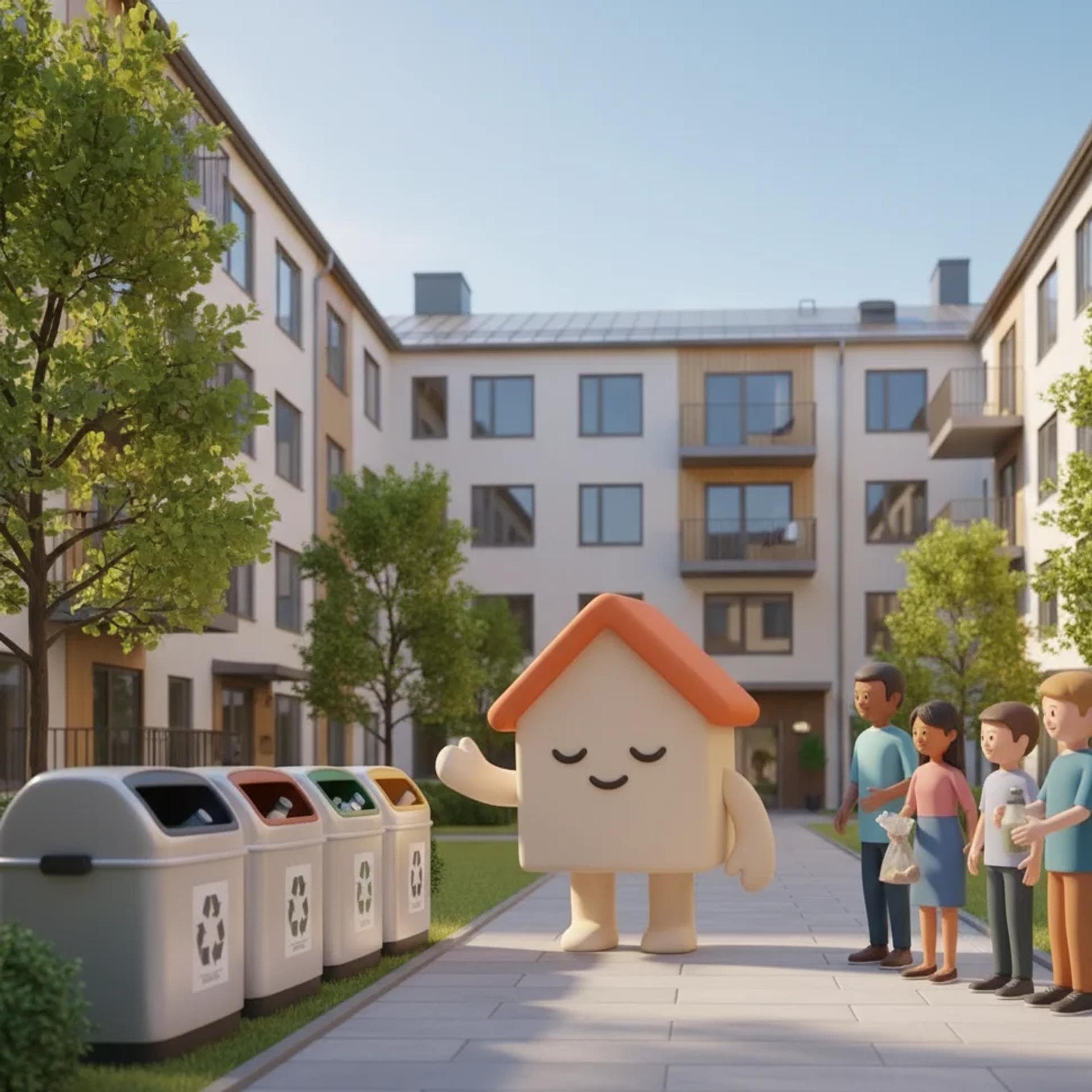
From 2026, housing cooperatives (BRFs) in Sweden – known as bostadsrättsföreningar, the country's most common form of resident-owned apartment buildings – face a revolution in waste management. New legal requirements, inspired by EU directives and Sweden's strong environmental protection goals, mandate more efficient sorting, additional bins, and improved handling of food waste and hazardous waste. Failure to adapt could result in fines and unnecessary costs for your BRF, but with early planning, it becomes an opportunity for sustainability and increased property value. On Bostadsmerit.se, your leading source for insights and news on the Swedish housing market, we provide the guidance you need on waste management for Swedish BRFs in 2026. From legal mandates to practical implementation: continue reading to understand the drivers behind the reform, its impact on your cooperative, step-by-step rollout, costs, and smart tips to help both residents and professionals navigate these changes successfully.
What are the new waste management requirements for BRFs in Sweden 2026?
From 2026, new waste management requirements for BRFs are introduced through amendments to Sweden's Waste Ordinance and Environmental Code. These rules, set by the Swedish Environmental Protection Agency (Naturvårdsverket) and guided by Boverket (the Swedish National Board of Housing, Building and Planning), aim to boost recycling and reduce environmental impact. Unlike previous rules that required sorting fewer fractions, BRFs with multi-family buildings must now sort at least eight waste fractions and handle hazardous waste separately.
The rules primarily affect BRFs with over 50 apartments or those generating significant waste volumes, but smaller cooperatives are encouraged to follow them voluntarily. Earlier requirements focused on basic sorting, while the new ones emphasize source separation directly in households for more efficient management.
Source Separation and Sorting Obligations
The new rules require expanded source separation of at least eight fractions: paper, cardboard, plastic, metal, glass (colored and colorless), food waste, as well as household waste like textiles and electrical waste. This differs from before, when food waste could often be mixed with residual waste.
BRFs must provide clearly labeled bins and information for residents. The Swedish Environmental Protection Agency recommends digital guides to ease the transition to waste management for Swedish BRFs in 2026.
Handling of Hazardous Waste and Residual Waste
Hazardous waste such as batteries, chemicals, paints, and electronics must be collected separately in locked containers and delivered to approved receivers. New guidelines from Boverket require minimizing residual waste through better sorting, targeting under 50 liters per apartment per year.
Previous rules allowed simpler handling, but now BRFs must have routines for regular emptying and transport.
Documentation and Reporting Requirements
BRFs must keep logbooks of waste volumes, sorting rates, and deviations. Annual reports to the municipality are required from 2026, including data on recycling rates.
- Document empties monthly.
- Report sorting percentages and residual waste amounts.
The Swedish Environmental Protection Agency provides templates to simplify the process.
Why are these new waste management laws being introduced in Sweden?
The new requirements for waste management in Swedish BRFs 2026 are driven by a strong need to address climate challenges and promote a circular economy. The EU and Sweden are investing in reducing waste mountains and increasing recycling, directly impacting housing cooperatives (BRFs). Through better sorting and handling, BRFs can contribute to sustainability goals while saving money in the long term.
EU Directives and National Environmental Goals
The EU's Waste Framework Directive (2008/98/EC) requires member states to reduce waste and prioritize reuse and recycling. Sweden has committed to achieving 70 percent material recycling of household waste by 2030, per environmental goals in Proposition 2021/22:120. These directives drive changes in waste management for Swedish BRFs in 2026 to align with national and European targets.
Statistics on Waste in Swedish BRFs
According to Avfall Sverige (the Swedish Waste Management Association), around 4.8 million tons of household waste are generated annually in Sweden, with BRFs accounting for a significant share. Current recycling rates for multi-family buildings are about 50 percent, but potential reaches up to 80 percent with better source separation. Data shows improper handling leads to high costs; a BRF can save tens of thousands of kronor through optimization.
- Current recycling: 48–52 % in BRFs.
- 2026 target: Increase to at least 65 %.
- Improvement potential: Reduce landfilling by 30 %.
Environmental and Economic Benefits
More efficient waste management reduces environmental impact through lower methane and CO₂ emissions. Resource efficiency leads to long-term savings on waste handling, which can be redirected to property maintenance. For BRFs, tools like Bofrid are recommended to simplify planning and monitoring of these requirements.
In summary, these laws strengthen the sustainability and economy of Sweden's housing sector.
How will your Swedish housing cooperative be affected by the 2026 requirements?
The new requirements for waste management in Swedish BRFs 2026 will impact all housing cooperatives, varying by property size and current setup. Small cooperatives with few apartments face simpler adjustments, while larger complexes require major infrastructure investments. For residents, it means changed waste routines, and boards must handle increased administration and communication.
Small vs Large BRFs
Small BRFs with up to 20 apartments have lower sorting and volume requirements but must still introduce source separation for food and hazardous waste. For example, a small property might need an extra bin for food waste, costing around 10,000–20,000 SEK initially.
Large BRFs with over 50 apartments are hit harder due to higher waste volumes. They often need newly built waste rooms with ventilation, compactors, and digital booking systems. A large cooperative can expect investments of 500,000 SEK or more, plus ongoing transport costs.
Impact on Residents and Board
For residents, daily life changes with more sorting, like weekly food waste handling instead of traditional chutes. This increases risks of bin misuse and complaints about odors.
The board gains new routines: regular inspections, resident info via apps or letters, and training sessions. Good communication reduces conflicts – tip: hold digital meetings on waste management for Swedish BRFs in 2026.
Penalties for Non-Compliance
Municipalities can issue injunctions for non-compliance. Common penalties:
- Conditional fines: 10,000–50,000 SEK per violation for small BRFs.
- Repeated cases: Up to 100,000 SEK or more for large cooperatives.
- Supervision process: Inspection, protocol, court if not rectified.
Avoid risks with early planning – Bostadsmerit recommends consulting experts now for a smooth transition.
How to implement the new requirements step by step?
Step 1: Inventory and Planning
Map current waste management via a waste room inspection and member survey. Identify gaps like missing bins for food waste or sorting.
Checklist for inventory:
- Document bin types, capacity, and placement.
- Check space for new fractions (food waste, plastic, paper packaging).
- Estimate costs with supplier quotes.
Create an action plan at the next board meeting. Template: "Board Minutes – Waste Management 2026: Approved plan X, budget Y SEK, responsible Z."
Step 2: Updating Waste Rooms and Bins
Update the waste room with approved bins for waste management in Swedish BRFs 2026. Choose lidded bins for food waste and clear signage.
Recommendations:
- Place food waste bins near entrances for easy access.
- Contact municipal waste companies for rental agreements and subsidies.
- Install before Christmas 2025 for a test period.
Order from certified suppliers and document changes in the cooperative's records.
Step 3: Education and Communication
Engage members through information and training to ensure compliance.
Strategies:
- Distribute info sheets with sorting tips (template: "New Waste Management from 2026 – How to Sort Right").
- Hold digital or in-person meetings with demos from the waste company.
- Use website reminders and notes.
Evaluate after three months and adjust. On Bostadsmerit.se, find updated templates and news.
How much does it cost to comply with the requirements and how to finance it?
Costs for implementing waste management in Swedish BRFs 2026 vary by cooperative size, existing infrastructure, and solutions chosen. Typical expenses include purchasing bins for sorting, transport, installation, and ongoing administration. Average initial investment is 5,000–15,000 SEK per apartment, with annual operating costs of 1,000–3,000 SEK per apartment.
Cost Estimates per Apartment
For a small BRF with 20 apartments, costs for new bins (food waste, plastic, paper packaging) total around 100,000 SEK, or 5,000 SEK/apartment. Installation and space adjustments add 50,000 SEK.
Medium-sized BRFs (50 apartments) need around 400,000 SEK for bins and transport (8,000 SEK/apartment), while large ones (100+ apartments) may reach 1 million SEK (10,000 SEK/apartment) including automation.
Administration costs: 20,000–50,000 SEK/year for training and monitoring.
Financing Options and Grants
Adjust monthly fees by 500–1,500 SEK per apartment to spread costs. Apply for grants from the County Administrative Board via Klimatklivet (up to 50% of investment for eco-friendly solutions).
Municipal incentives like investment support or subsidized transport are common. Lenders offer green loans with lower interest for waste management in Swedish BRFs 2026.
- Check Boverket's guidance for applications.
- Collaborate with neighboring BRFs for bulk purchases.
Long-Term Savings
Recycling reduces residual waste volume by 30–50%, lowering collection fees by 20–40% over time. Example: A BRF saves 100,000 SEK/year after 3 years via lower tonnage fees.
Efficient sorting yields energy gains from biogas. Tip: Install sensors for optimized collection and engage residents via apps to maximize savings.
What practical tips and best practices are there for Swedish BRFs?
To meet the new requirements for waste management in Swedish BRFs 2026, Avfall Sverige recommends smart, sustainable solutions for BRFs. Food waste grinders and digital sorting apps can reduce volume by up to 30 percent. Bostadsmerit.se offers deeper implementation guides.
Technical Solutions and Innovations
Modern tools greatly simplify waste management in Swedish BRFs 2026.
- Sorting apps: Like the Renova app, guiding residents via QR codes and rewarding correct sorting with points.
- Bin sensors: Fill-level sensors send data to the board for optimized emptying, cutting costs.
- Compact solutions: Underground bins or kitchen food waste grinders reduce space and odor issues.
These innovations from suppliers like SUEZ and Envac scale to most BRFs.
Case Studies from Swedish BRFs
Several BRFs have already succeeded with practical waste management in Swedish BRFs 2026.
- BRF Solbacken in Gothenburg: Installed food waste grinders in 2024, halving food waste and boosting recycling to 65 percent.
- BRF Centralen in Stockholm: Used sensors and app, resulting in 20 percent lower emptying costs after six months.
Avfall Sverige highlights these as models for smooth transitions.
Collaboration with Municipalities and Suppliers
Select partners by requesting references and calculations.
- Contact the municipality early for grants on food waste collection.
- Compare quotes from certified suppliers offering service agreements.
- Involve residents via digital meetings for acceptance.
On bostadsmerit.se, find checklists and more case studies to navigate waste management in Swedish BRFs 2026 effectively.
Common Questions about Waste Management in Swedish BRFs 2026
Must all BRFs sort food waste?
Yes, from 2026, the Swedish Environmental Protection Agency's regulations NFS 2024:3 require most BRFs to introduce food waste sorting as part of waste management in Swedish BRFs 2026. Exceptions apply to small cooperatives with fewer than 4 households or under 1.5 tons of food waste annually. Check local requirements via your municipality to ensure compliance.
Who is responsible for the costs?
The board of the BRF is responsible for deciding on investments in waste management in Swedish BRFs 2026, but costs are usually distributed among members via higher monthly fees. Per the Act (2018:1182) on Economic Associations, decisions are made at the annual meeting. Budget early for bins, composting, and subscriptions.
What happens if we don't make it by 2026?
There are transition periods until 2027 for some BRFs, regulated in Ordinance (2024:XXX). Delays can lead to fines from the municipal environmental office, up to 50,000 SEK. Plan now using the municipality's waste plan to avoid penalties.
Are there grants for new bins?
Yes, municipalities often offer support for new sorting bins, and Klimatklivet provides investment grants up to 50% for sustainable solutions in waste management in Swedish BRFs 2026. Apply via the Swedish Environmental Protection Agency or local environmental office. For example, grants cover brown bins for food waste.
How do we communicate with members?
Use board meetings, info sheets in stairwells, and digital tools like apps or email lists to inform about waste management in Swedish BRFs 2026. Hold sorting workshops and share routines clearly. Good communication reduces conflicts and boosts compliance.
Where can I find official guidance?
The Swedish Environmental Protection Agency (naturvardsverket.se) has guides on food waste, Boverket (boverket.se) tips for BRF governance, and your municipality's website specific plans. For deeper housing market insights, visit bostadsmerit.se.